3-Day Intensive
VIBE
CODE
The Rubber Ducky Collective
Max Bernstein — March 2026

3-Day Intensive
The Rubber Ducky Collective
Max Bernstein — March 2026
3 days. 1 system. Your idea to a working app.
DAY 1
The Idea
Validate what's worth building
DAY 2
The Build
Plan to working app
DAY 3
The Quality
Prompt arch nobody teaches
By the end: validated idea + working app + prompt engineering that separates real products from app slop.
What exactly is YOUR competitive advantage?
Hard: Building the thing
Hard: Knowing WHAT to build and WHY anyone would pay
The Third Wave
The pattern has played out twice. Here comes round three.
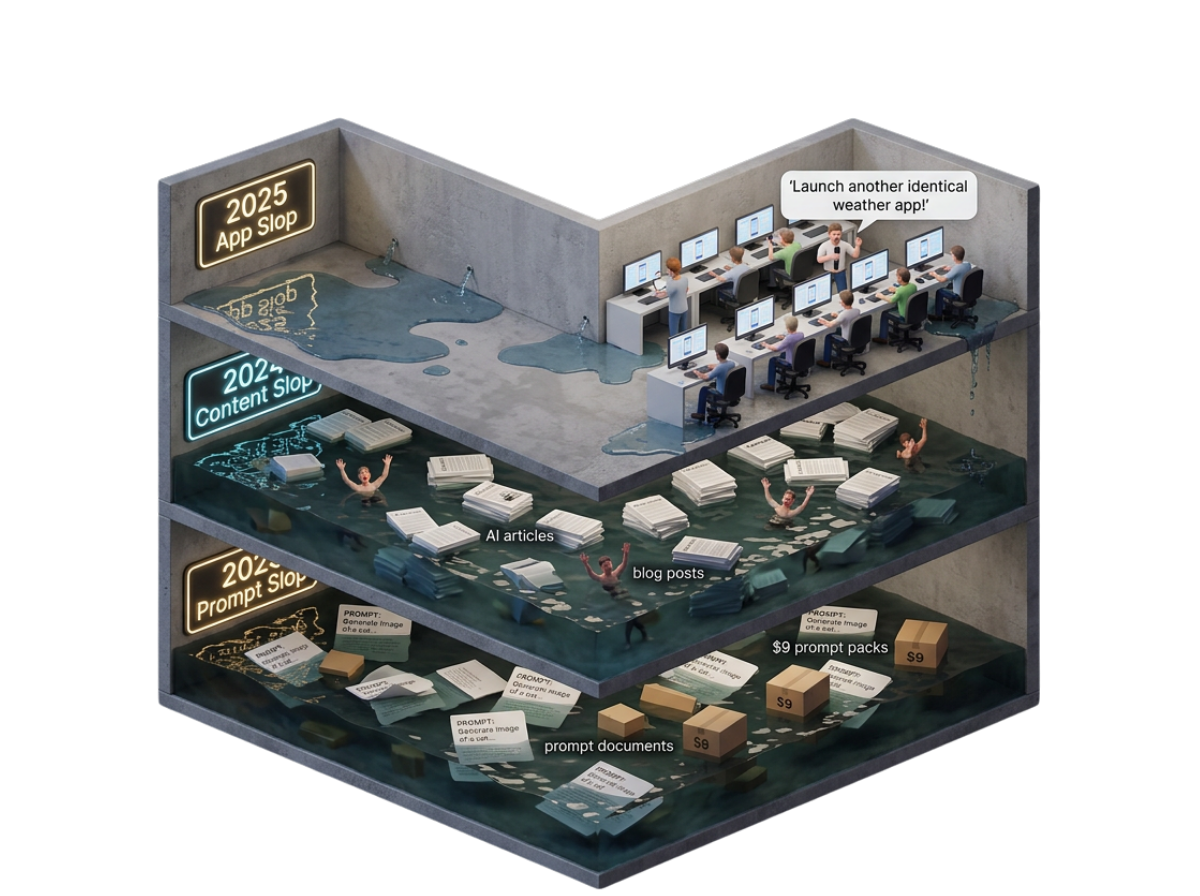
2023
Prompt Slop — Everyone sells shitty prompt packs
2024
Content Slop — Everyone publishes AI garbage
2025–26
App Slop — Everyone ships mediocre apps
You've already seen this pattern twice. The third wave is here.
Right now there are thousands of people building the same app you're thinking about. Same tools. Same templates. Same tutorials.
The answer isn't building faster. It's building smarter.
WHAT
A validated problem, not a cool feature
WHO
A specific person with specific pain, not "everyone"
WHY
Evidence they'll pay, not your gut feeling
Domain expertise + AI = defensible moat. That's the thesis of this entire course.
The Course Framework
Every decision in this course runs through this framework.
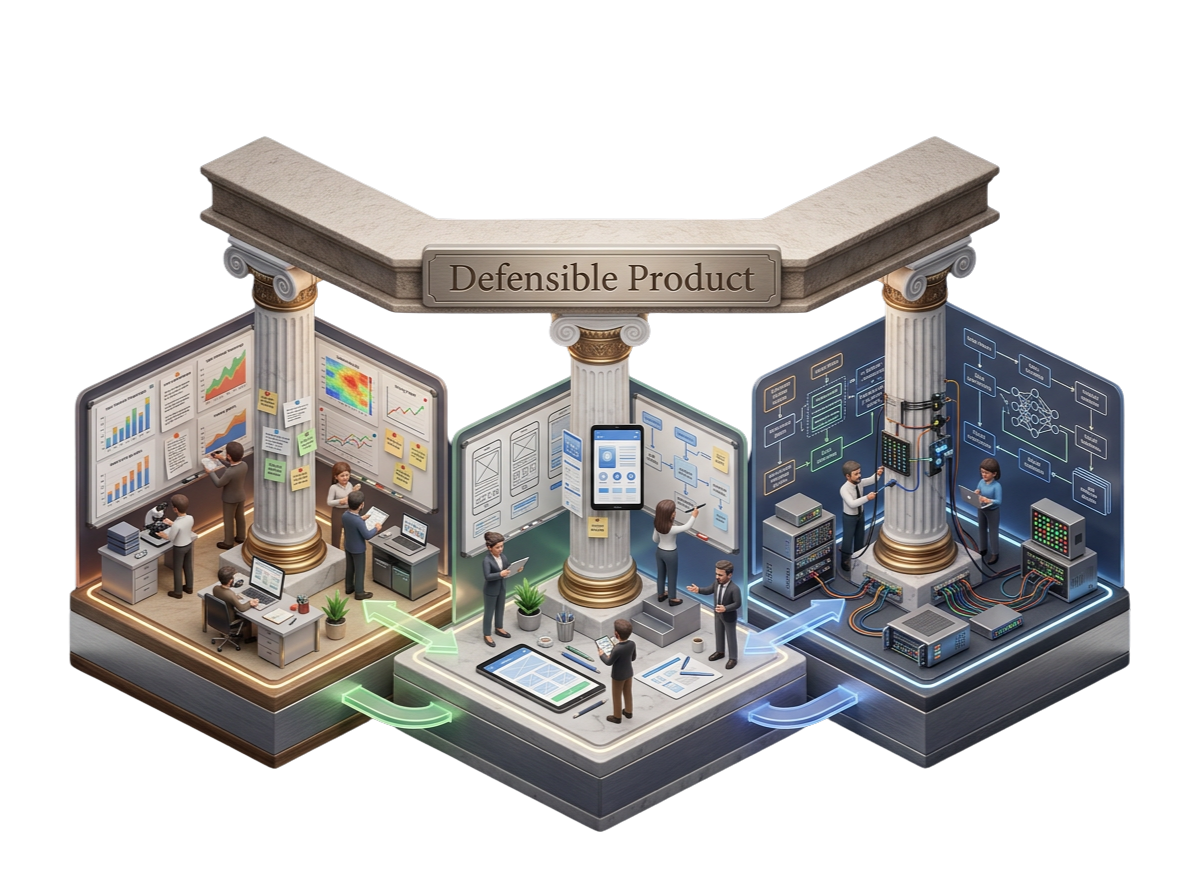
Research & Evidence. The foundation everything else rests on.
UI Mockups & UX. Table stakes. Without it, nobody trusts your app.
Prompt engineering that separates real products from app slop. The differentiator.
A 10-year-old can build an app. But they can't...
"The internet is already full of people telling you what they'll pay for."
Three frameworks today:
Table stakes. Not the moat. But without it, nobody trusts your app.
Good news: this used to be the hard part. It's not anymore.
Later today: component libraries that make your app look like a $50K design team built it. For $12/month.
Peter Thiel, Zero to One
The prompt behind the app IS the product.
If your prompt is generic, your app is generic. Period.
99% of people using AI think their output is good. It's not. It's just plausible.
Day 3 is entirely about this.
"The internet is already full of people telling you what they'll pay for."
Reddit threads. App Store reviews. Forum complaints. Support tickets. The evidence is everywhere. We just need to listen strategically.
The next section gives you a system to do exactly that, no matter where you're starting from.
Find yourself below. Every path leads to the same destination.
Path A
No Idea
Personal inventory
Skill/interest matching
Market scanning
Path B
Know My Market
Reddit research
Review mining (2-3 stars)
Pattern recognition
Path C
Have Clients
Avatar analysis
Content mining
Framework extraction
Path D
Own Itch
Personal pain audit
Workflow analysis
"Am I Weird?" check
All paths converge here
Strategic Brief Complete
BUILD
Score 24-30
PIVOT
Score 15-23
KILL
Score 0-14
Where Are You Starting?
You're not behind. You just took a different entrance.
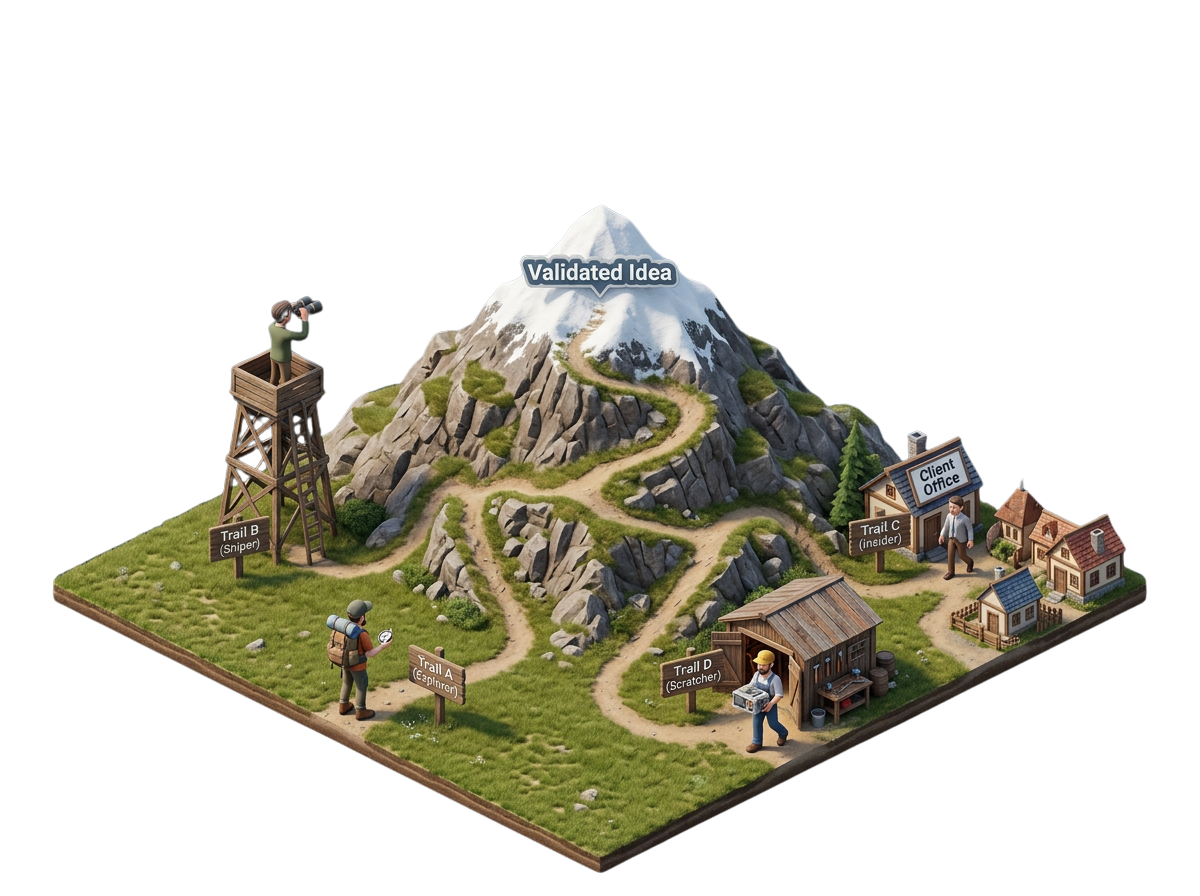
"I want to build but don't know what"
"I know WHO but not WHAT"
"I have clients, building for them"
"I'm solving my own problem"
All four converge to → VALIDATION
"I want to build something but I have no idea what."
You're not starting from zero. You have skills, access, frustrations, and a network others don't. The prompt helps you inventory all of it.
The Process
What You Get
Total time: 3-4 hours from "no idea" to scored opportunities. Full prompt in resources.
"I know WHO I want to serve. I just don't know WHAT to build them."
The 4-Phase Process
Find where your market complains. Reddit, forums, app reviews. Read 100+ posts minimum.
Mine 2-3 star reviews (most honest). Look for recurring patterns across sources.
Competitive intelligence. Which problems are worth solving? Where do existing solutions fail?
Complete brief with validation evidence. Your beachhead segment selected.
Don't pick the biggest market. Pick the one you can WIN first. (Geoffrey Moore, "Crossing the Chasm")
Full prompt in resources.
"I already have clients. I'm building something for them."
You have what others pay for: direct access, real conversations, trust, and insider knowledge of their actual workflows.
Your Research Sources (You Already Have These)
Sales calls, onboarding, support tickets, email threads
Videos, courses, blog posts, training materials
Repeated questions, struggles despite your help, complaints
Communities they're in, tools they use, influencers they follow
The Insider Trap
Categories 1-4 feel easy because you know your clients. Categories 5-8 are where insiders get blindsided. Can it scale without you? Can you reach beyond YOUR clients?
Full prompt in resources.
"I'm solving my own problem."
The Hall of Fame
Just because YOU have a problem doesn't mean it's worth solving.
The 4 Validation Questions
Red Flags
You're an edge case. You're a power user building for beginners. Your "pain" is really just a mild annoyance. The market is under 1,000 people. The prompt includes an "Am I Weird?" check to catch all of these.
Full prompt in resources.
No matter where you start, you end up here: proving someone will pay before you build.
Total: ~60 min from "I think" to "I KNOW"
Quick Gut Check
Categories 5-8 are the blind spots. That's where ideas die quietly.
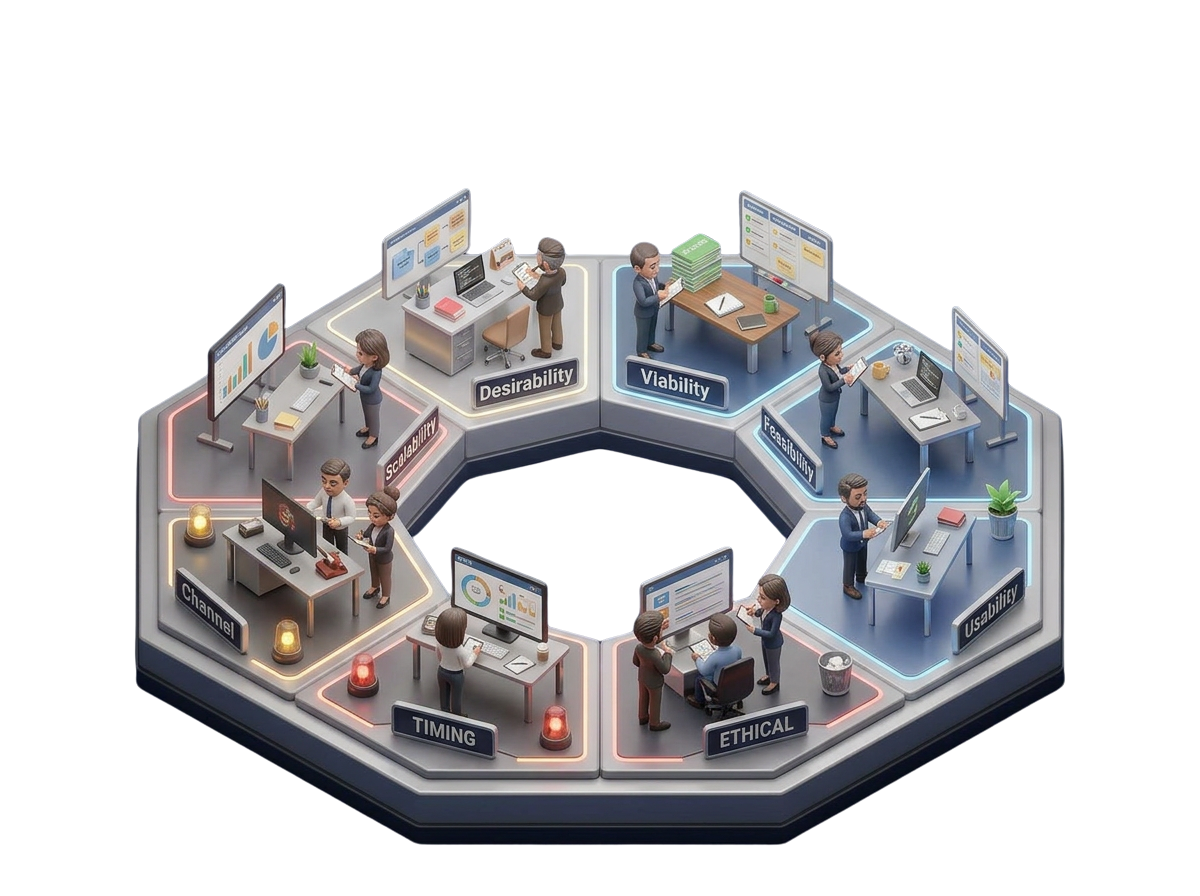
10 minutes. Saves weeks.
Common (everyone checks these)
Blind Spots (where ideas die)
Most people check 1-2. Check all 8.
What job is this hired for?
Will people actually pay?
How do we position it?
"You're just copying and pasting outputs from one prompt into the next. That's it."
Clayton Christensen, Harvard Business School
"People don't buy products. They hire them to do a job."
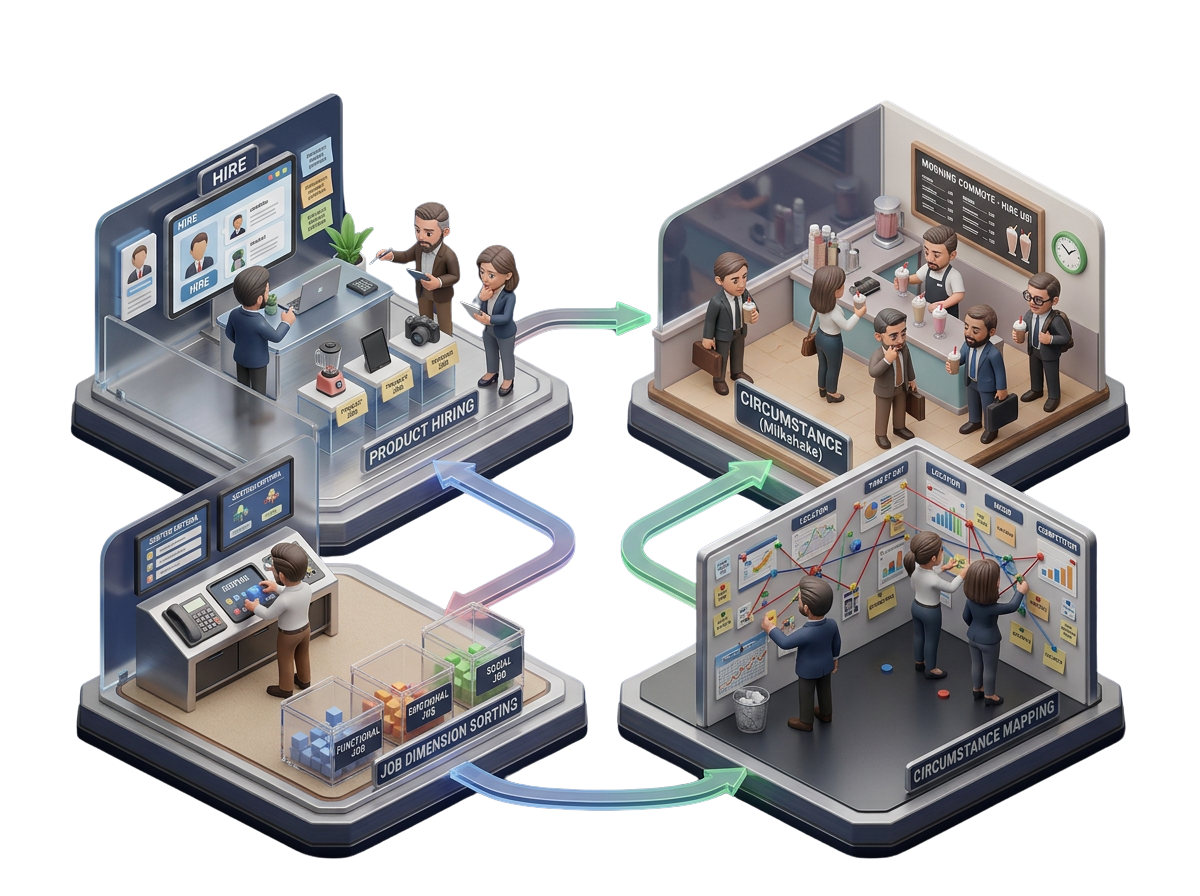
Most people only think about functional. The other three are where the real insight lives.
McDonald's couldn't sell more milkshakes until they realized commuters were "hiring" them for entertainment on boring drives.
Not nutrition. Not dessert. Commute entertainment.
Full prompt in the resource folder.
Rob Fitzpatrick
"Ask questions people can't lie about."
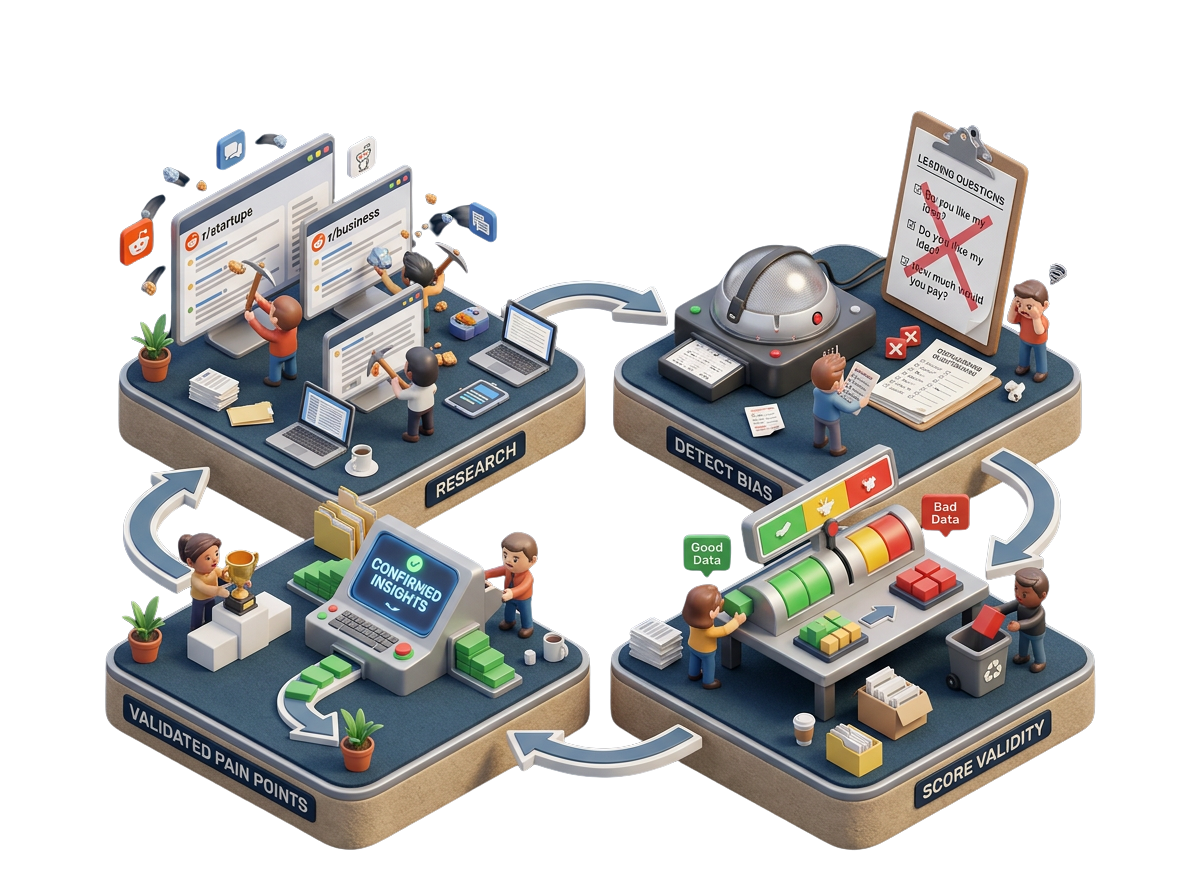
Modern adaptation: We use Reddit, forums, and app reviews instead of cold interviews. The data already exists.
20-30 min → Score ___/30
15-20 min, only if Stage 1 scores 15+
10 min → GREEN / YELLOW / RED
Total: 40-60 minutes from "I think this is good" to "I KNOW this is good."
Green = build it. Yellow = refine it. Red = kill it.
April Dunford
Position in sequence, not isolation.
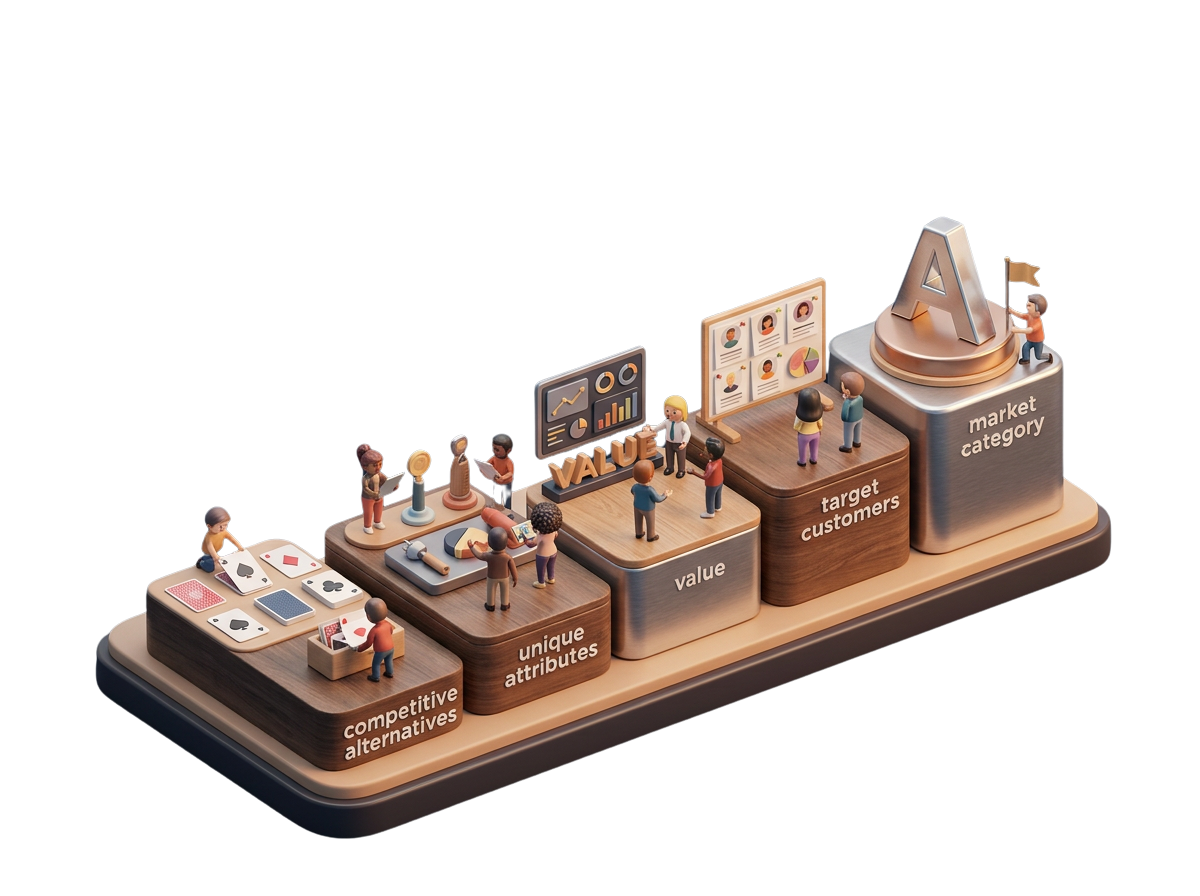
We're the ONLY ___ that ___ for ___, unlike ___ which ___
"What you don't build is as important as what you do build."
Constraint is a strategy.
You've been having conversations with AI. There are already things in those conversations worth building.
The Sawdust Principle: You already did the thinking. Don't waste it.
Every Claude conversation, every ChatGPT thread, every prompt chain you ran — there's a tool, calculator, or widget hiding in there.
Look at our conversation and identify potential artifacts
Output: list of buildable ideas from your chat
Score: ___/10
Three modes:
Pick based on complexity
Full prompts in the resource folder.
Alberto Savoia — "The Right It"
Pick your experiment. Test before you build.
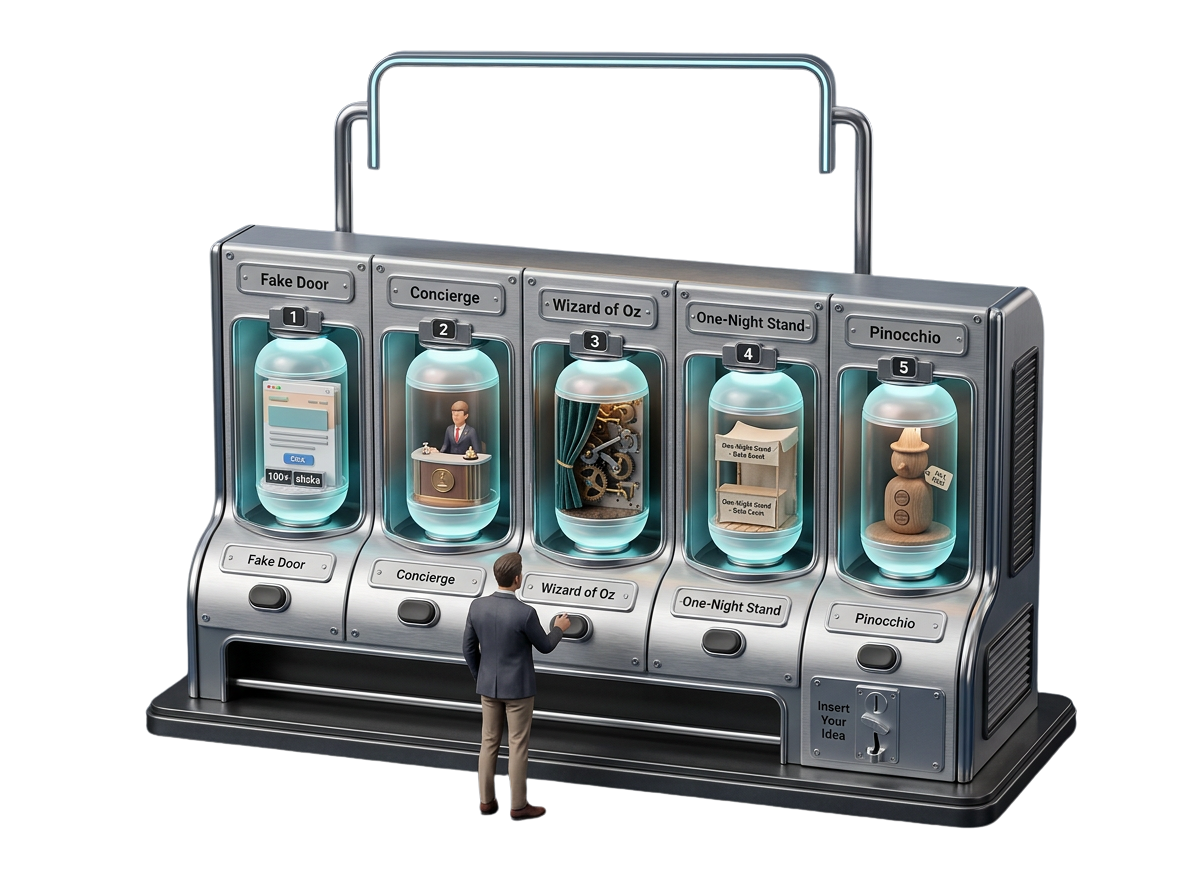
Name the test:
Naming the pattern helps you pick the right test.
Build artifact in Claude (interactive HTML, calculator, quiz, tool)
Test with real people. Does it work? Do they care?
Take validated code straight to Lovable → full deployed app
Get it working in Claude first. Validate it. THEN invest time building the full app.
The artifact is your cheapest possible test.
Day 2 picks up right here.
"Outside the coding community, nobody knows about this."
LIVE DEMO — Before → After
(generic app → professional app)
All you do:
Find a site you love
Grab the component code (or clone the page)
Give it to Lovable / Claude Code
It recreates the design for YOUR app
You're not stealing. You're referencing. Every designer has a swipe file.
Scans component library, builds custom components. Copy the prompt, paste into Lovable. Done.
Design components for web. Good starting templates.
Clone any website's design. Swap in your content.
All links in the shared resources folder.
You came in thinking the hard part was building. Now you know: the hard part is knowing what's worth building.
Before Next Session
All prompts in the shared resource folder. You copy-paste through the process.
Come back ready to build. If your idea scored Red, that's a win. You saved yourself weeks.